

Cleaning Pig Farm Gutters in Winter: Drain the Remaining Water in the Hose First, Don't Let Ice Damage the Pump Head
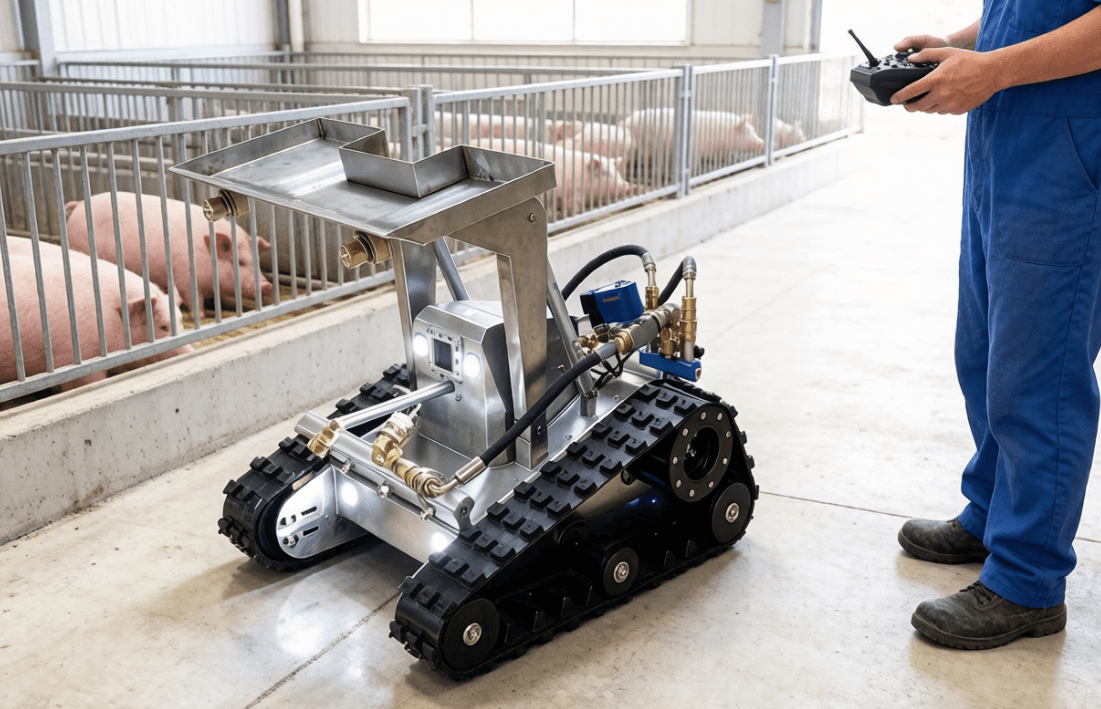
When cleaning pig farm gutters in winter, many farmers focus on water temperature and cleaning rhythm, but the easily overlooked part is whether the water in the lines has been drained at the end. Water left in the high-pressure hose or pump head freezes at low temperatures; ice expands and can damage seals and the pump head. So let's state the conclusion first: after winter gutter cleaning, drain the remaining water from the lines before storing the equipment.
Why Frozen Residual Water Damages the Pump Head
During operation, a high-pressure water-jet unit pressurizes water through the pump head and ejects it from the nozzles. After work stops, some water remains inside the lines and pump head. When temperatures fall below freezing, this water expands by about 9% as it freezes. Since the pump head's interior is sealed, the pressure from ice-crystal expansion acts directly on the sealing rings, valve plates and plunger surfaces. A single freeze-thaw may not show obvious problems, but after several cycles, seals deform and valve plates jam, and the pump head's output pressure drops.
This problem is more pronounced in northern pig farms and regions with large day-night temperature swings. Temperatures may be fine during daytime cleaning, but if the temperature drops sharply at night, the water left in the equipment can freeze overnight.
Key Points for Draining Residual Water in Winter
Step one: after cleaning, move the equipment to a wind-sheltered, puddle-free location. Step two: close the inlet valve, disconnect the inlet hose from the water source, and let the water in the lines drain naturally by gravity. Step three: start the equipment and idle it for 3-5 seconds, using the pump's own operation to fling out the residual water inside the pump head. This step is critical — gravity alone may not fully drain water in the pump head's internal cavities. Step four: remove the high-pressure lance, shake out the water inside the lance and nozzles, wipe them dry and store separately.
If conditions allow, store the equipment in a warehouse with a room temperature above 0°C. Farms without indoor storage should at least raise the equipment off the ground to avoid direct contact with the cold floor.
The muanbot-x6 crawler high-pressure water-jet cleaning robot weighs 26.75 KG with an IP65 protection rating. Its structure has a certain tolerance for low temperatures, but the pump head is a precision component, so draining residual water in winter is a step that cannot be skipped.
Additional Winter Operation Notes
In winter, try to schedule gutter cleaning during the warmer daytime hours. When the water is too cold, grease and scale harden and high-pressure water-jet efficiency drops. If the gutter has already frozen, do not force rinsing — wait for the ice to melt naturally or break it manually before starting the equipment. Also, the control computer and the 60m cable should not be exposed to low temperatures for long. The cable jacket hardens in the cold; when reeling it in, avoid pulling hard to prevent the jacket from cracking.
FAQ
Q: Can hot water be used with the gutter cleaning robot in winter?
A: Yes, but the water temperature must not be too high. Overly hot water accelerates seal aging. Room-temperature clean water is best; the priority remains draining residual water after cleaning.
Q: What if the pump head has already frozen?
A: Do not force-start the equipment. First move it to a warm environment to thaw naturally, and only test-run it after confirming the pump head can rotate freely. After thawing, check that water flows normally in and out; if anything is abnormal, the pump head needs to be disassembled and inspected.
Winter gutter cleaning, in short, adds just one step — draining residual water. It takes a few minutes but reduces equipment failures. If your pig farm needs a gutter cleaning solution, contact Muan Technology and we will arrange technicians to survey the trench structure and entrance/exit dimensions on site.